This is a case study done for and presented at San Jose City College. I am not affiliated, associated and/or endorsed by Zappos.
This case study was made to reflect on and identify weak spots in Zappos’ current shopping processes. Then create provide solutions to build Zappos into a stronger platform.
Who is Zappos?
Zappos is an online retail brand known for shoes and exceptional customer service. Their mission statement?
Live and Deliver WOW!
But to who?

Based on this data, our main audience is comprised of 25-34 year old female identifying people from the USA.
Where does Zappos fail to deliver WOW?
Recognition
-
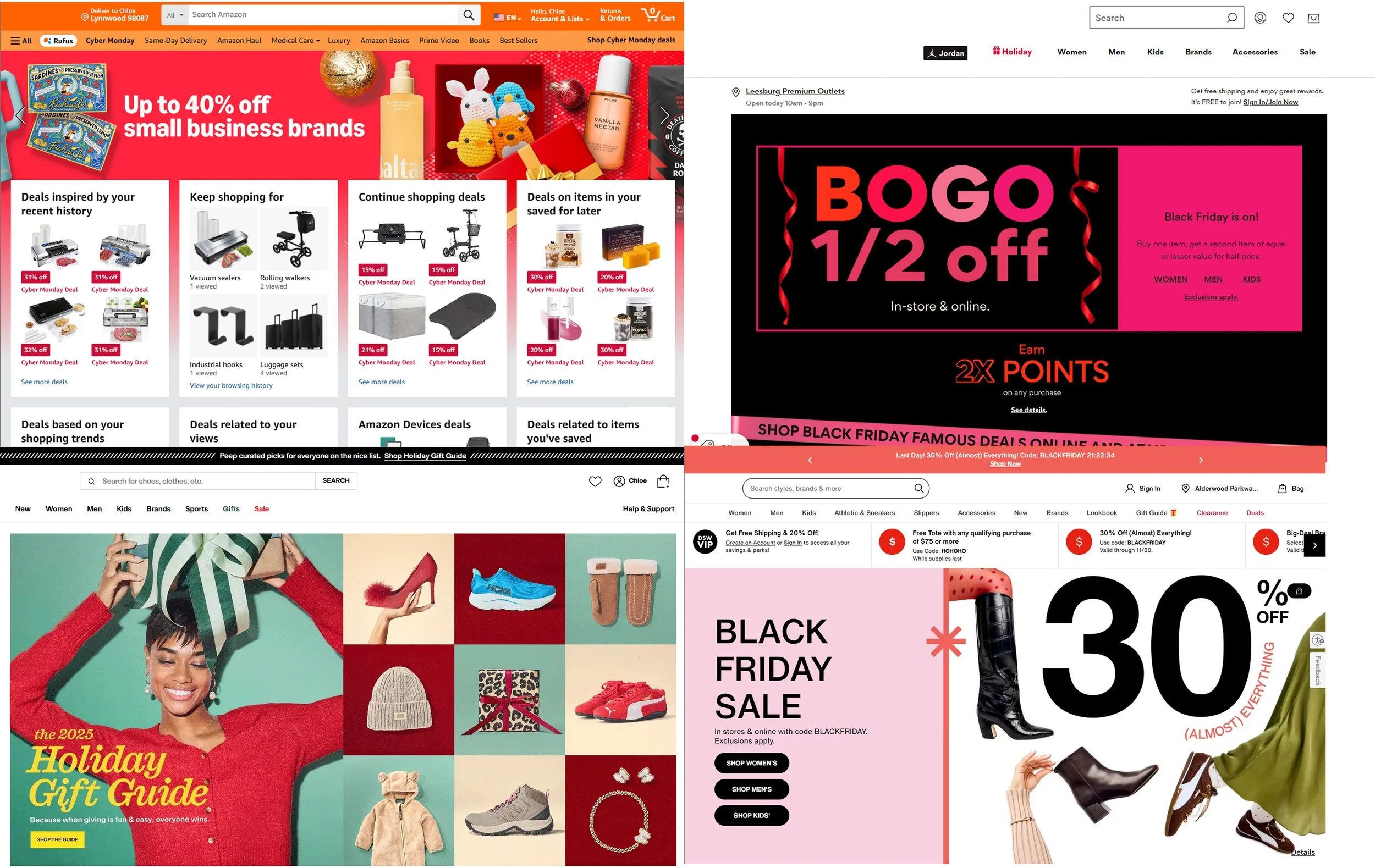
When surveyed, 1 in 11 people surveyed could name Zappos.
Amazon was the only one that’s instantly identifiable out of all of these landing pages, partially in thanks to using color, but because it has a unique layout compared to other stores.
From top left to bottom right: Amazon, Famous Footwear, Zappos, Designer Shoe Warehouse
Amazon acquired Zappos in 2009, as a result, Zappos has the option for you to login with your Amazon account.
2. Saved Information
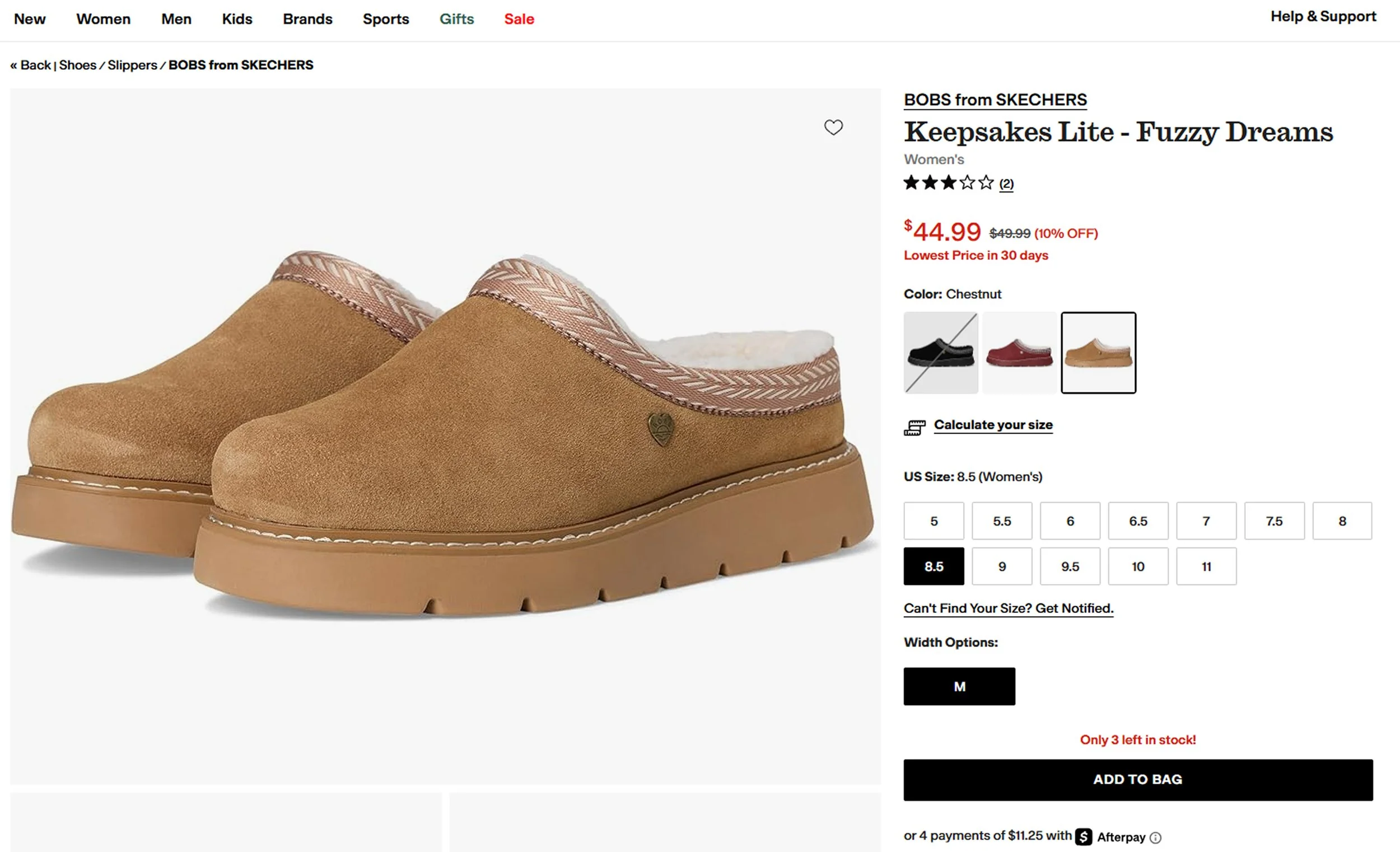
Zappos doesn’t make use of the saved information in an Amazon account, like sizes, addresses, or card information.
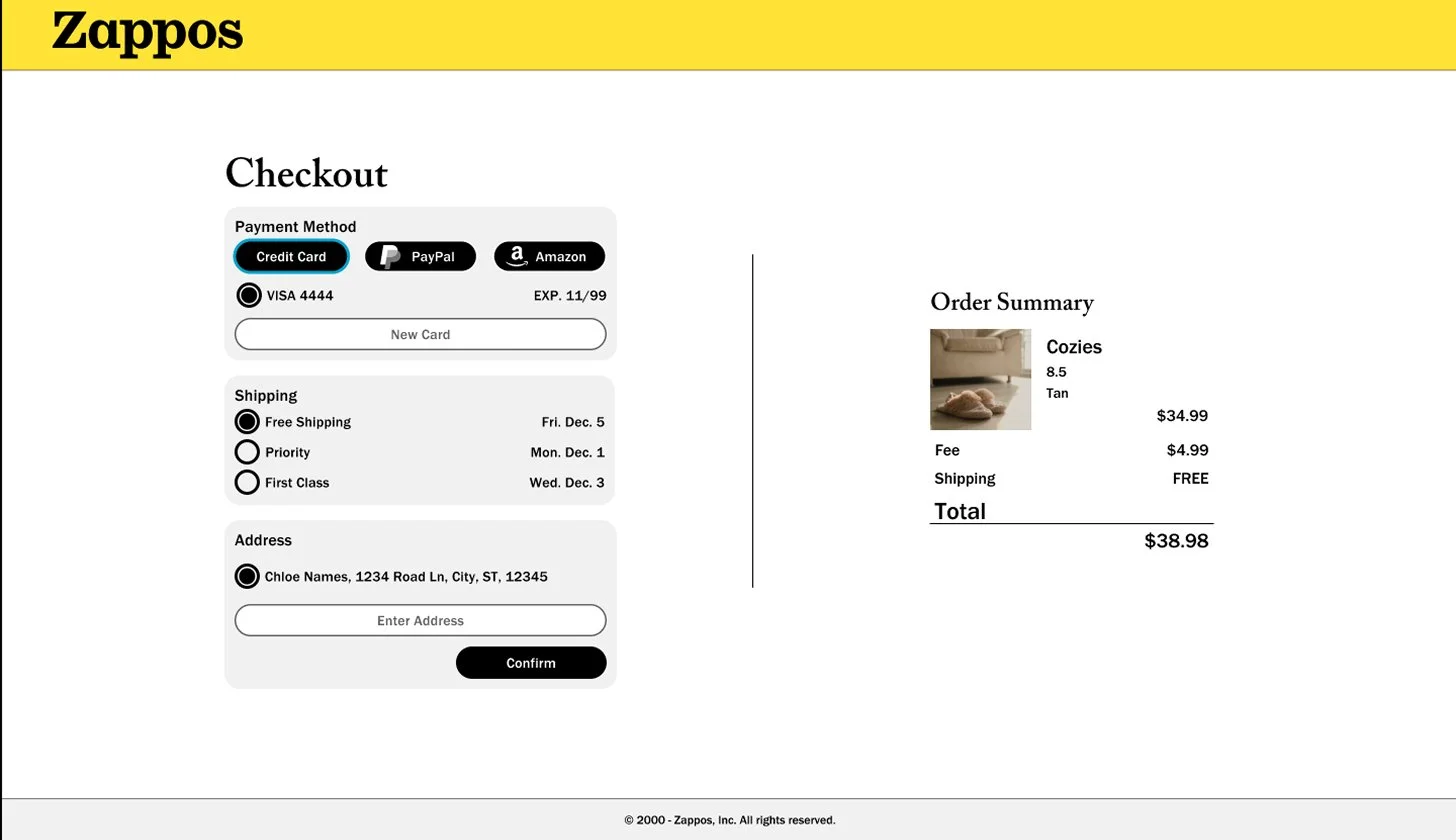
3. Checkout
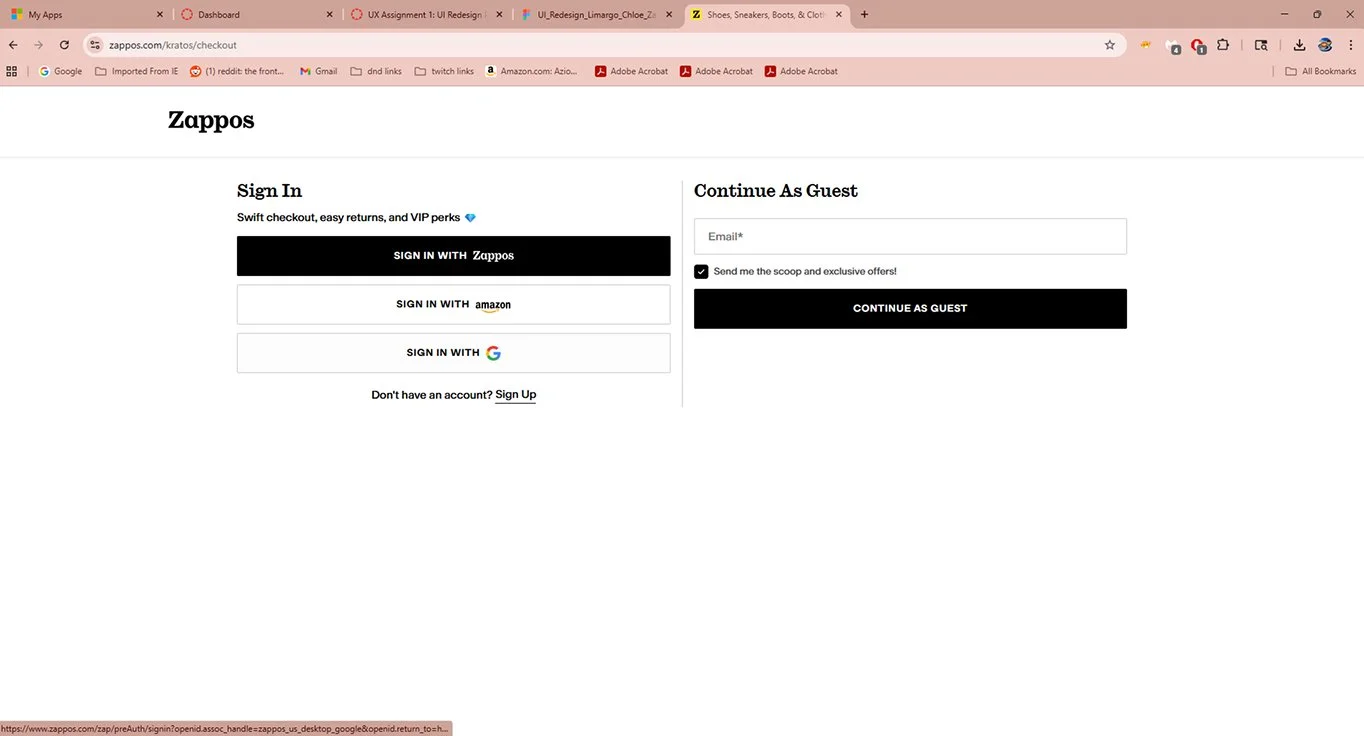
Zappos makes you log in again to proceed with checkout, and forces every step of the checkout process to be a new page, breaking up checkout into 8 separate steps.
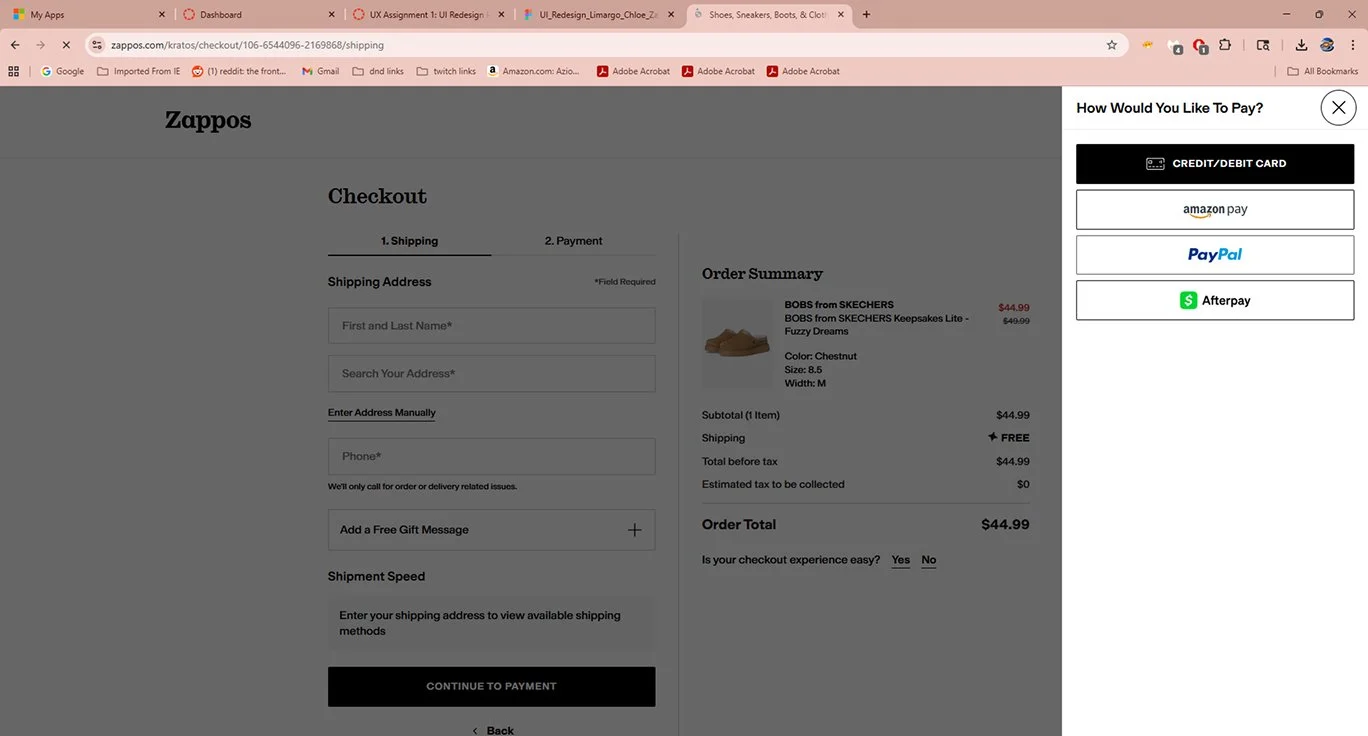
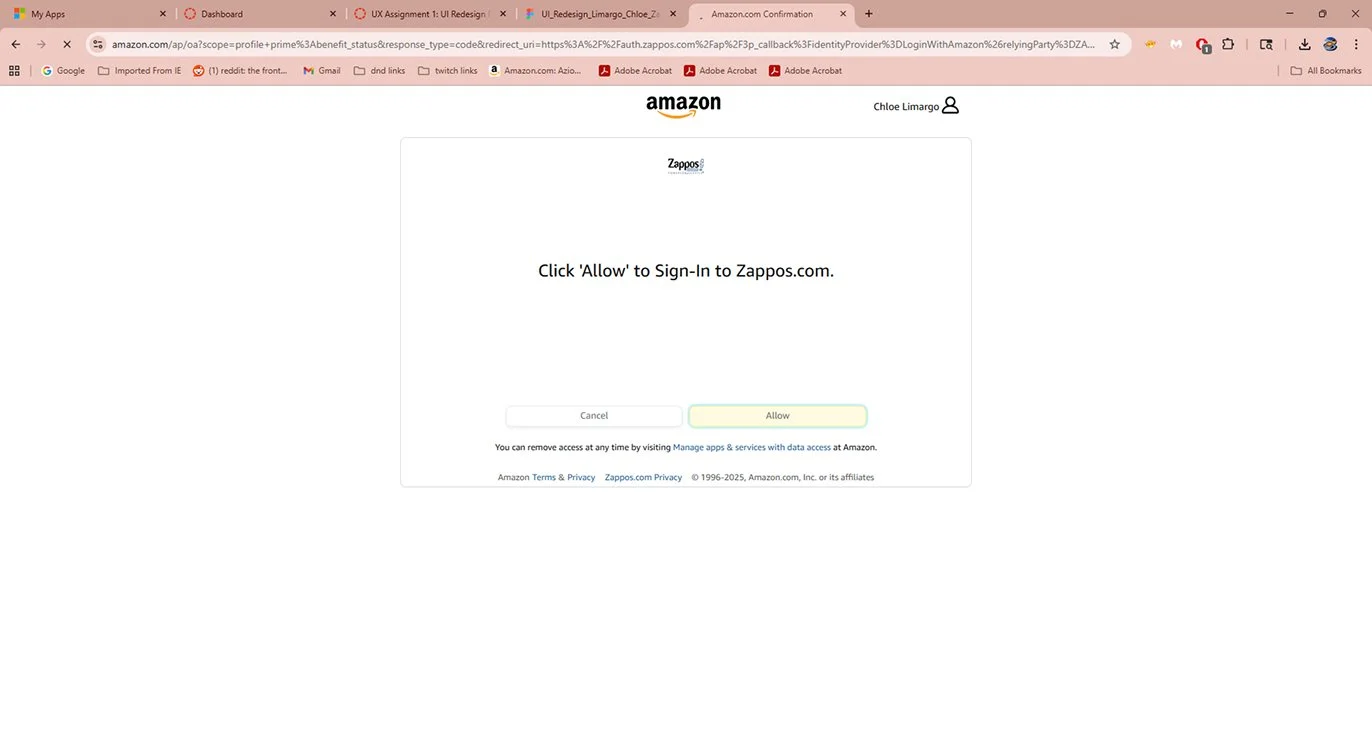
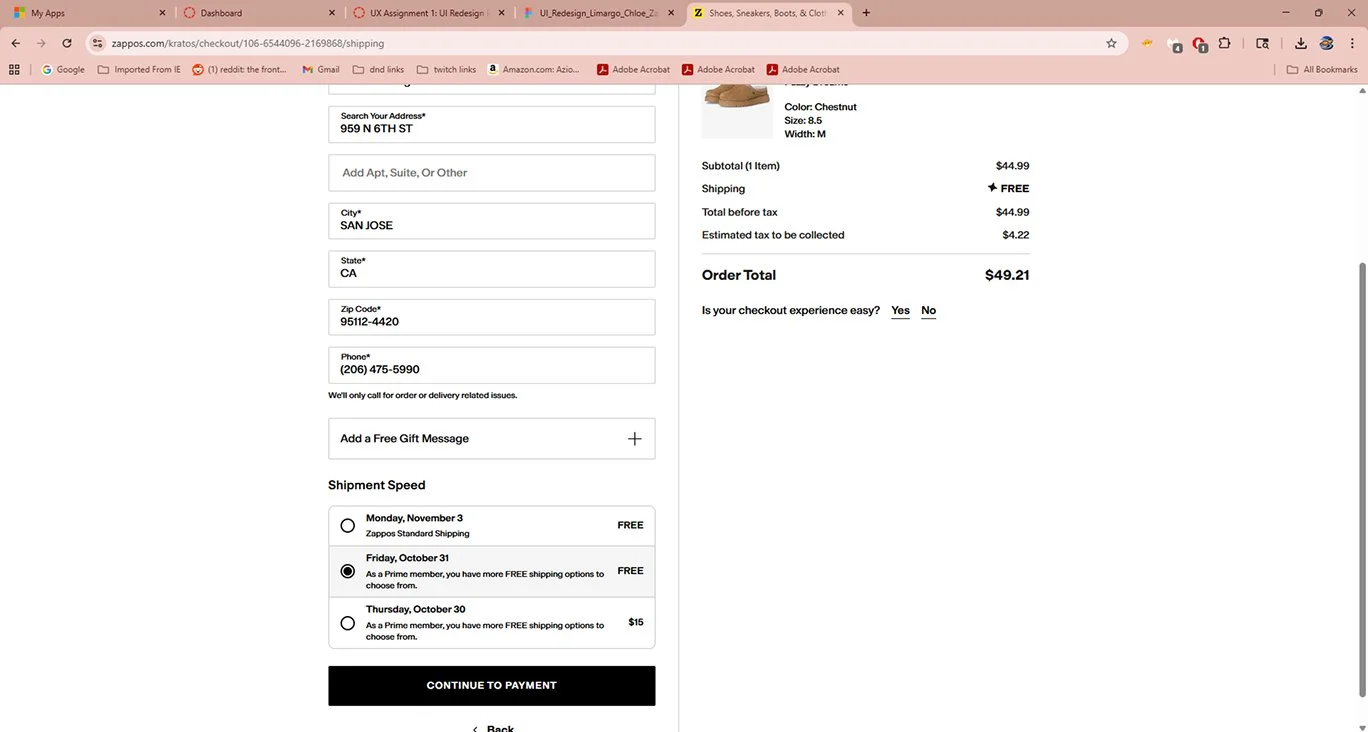
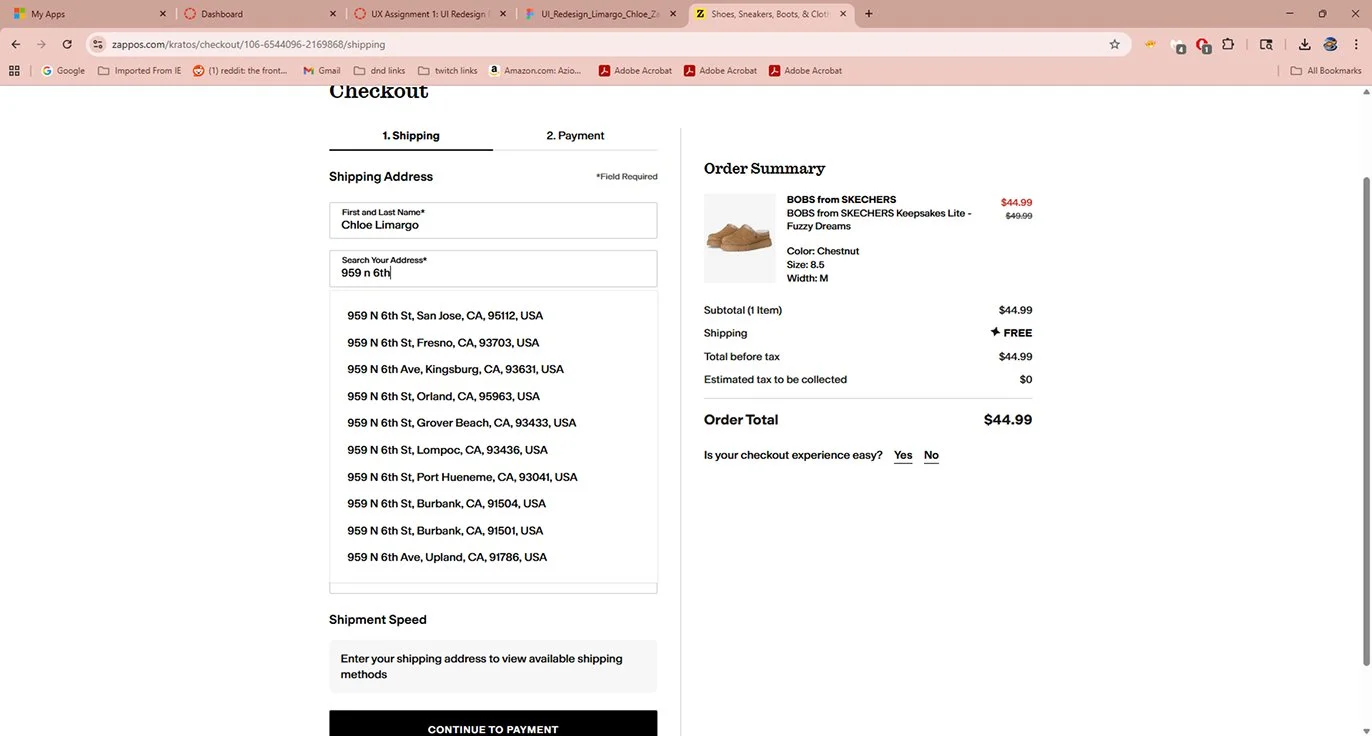
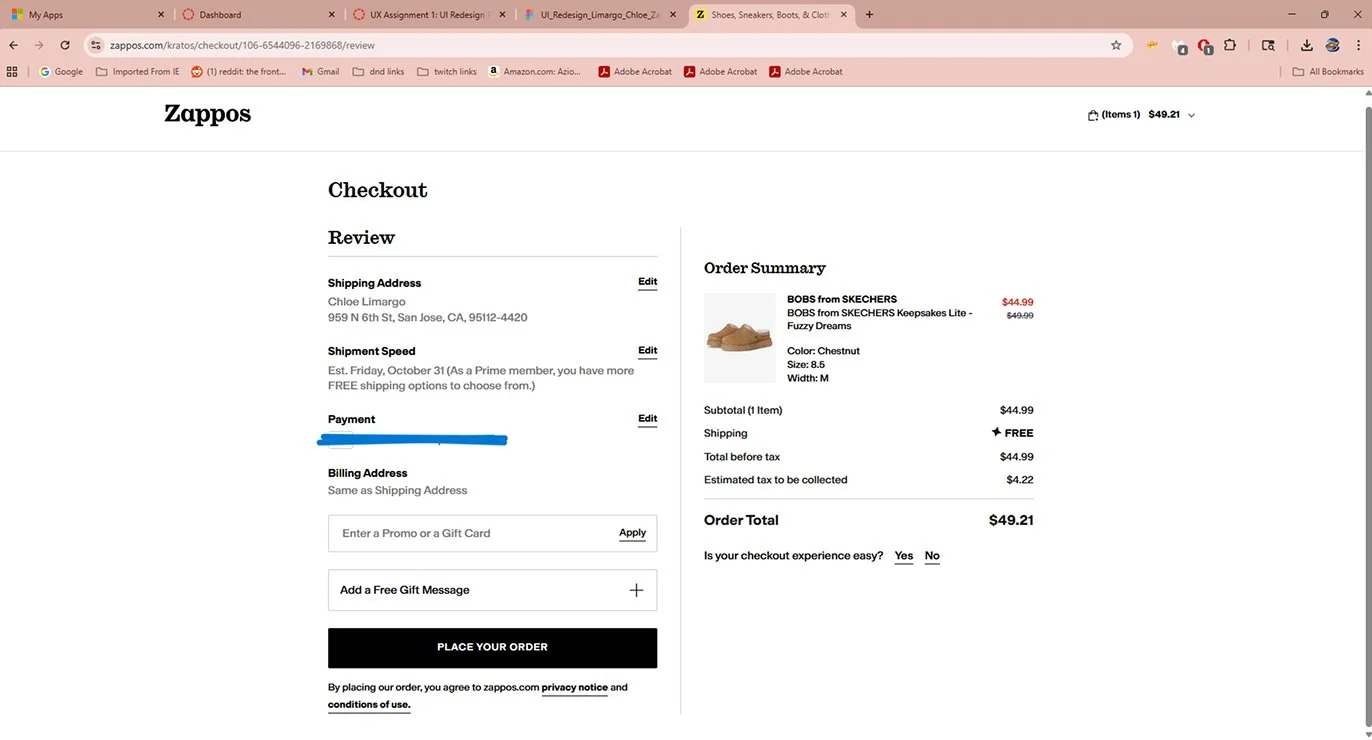
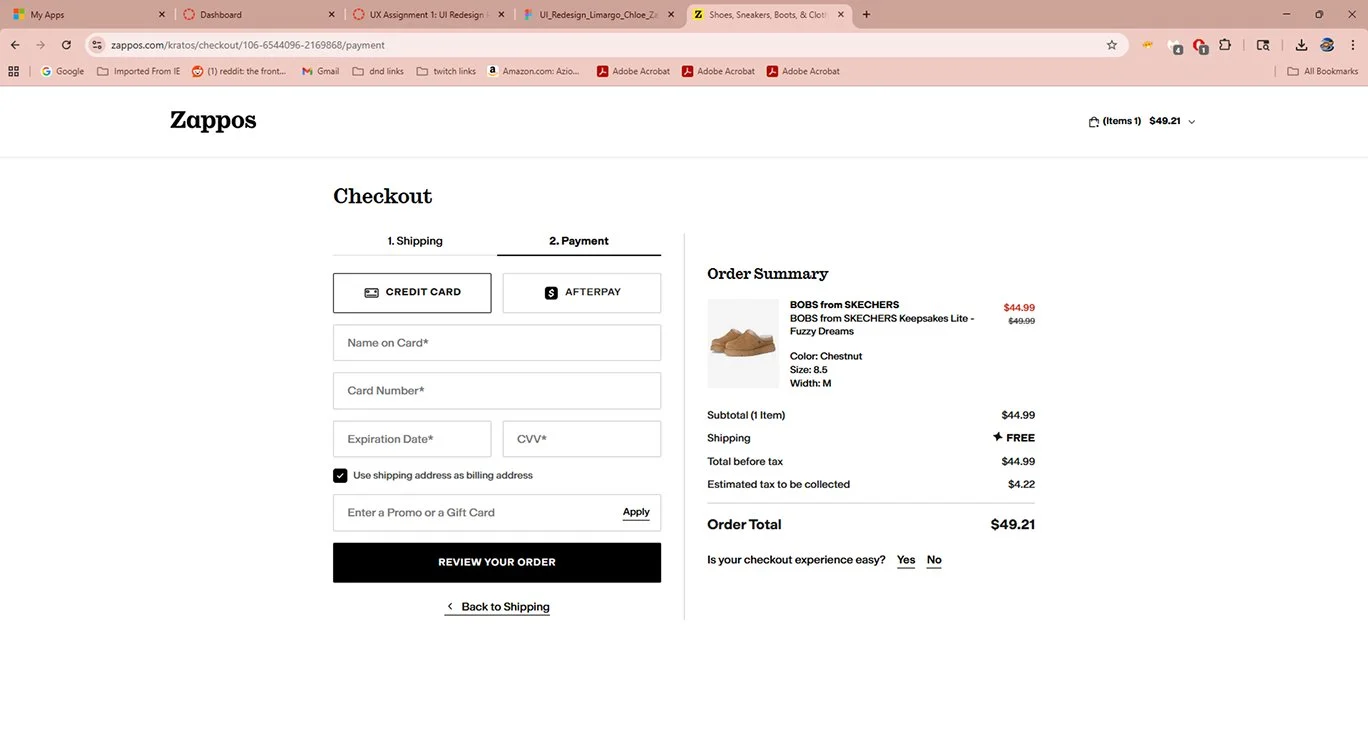
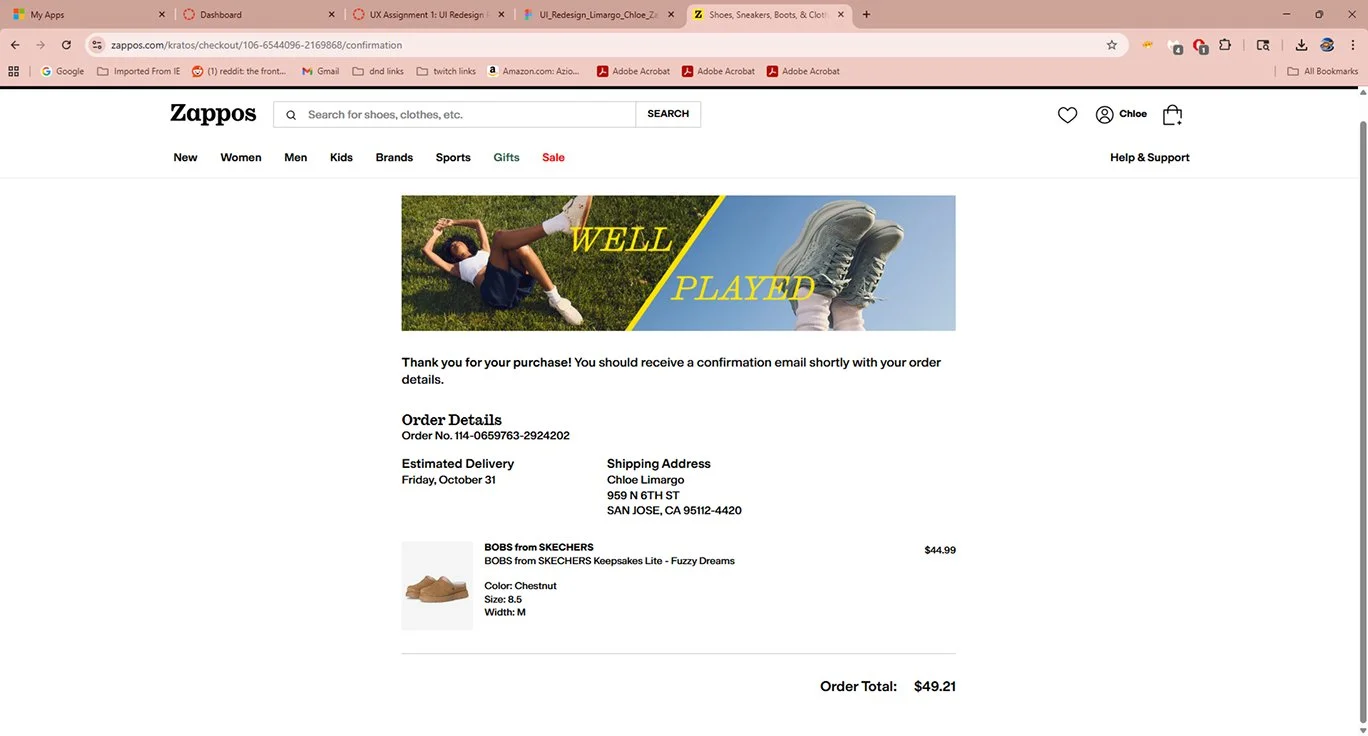
In total, the current Zappos shopping experience requires 18 steps/clicks
These three changes cut that process down to 9 that stick.
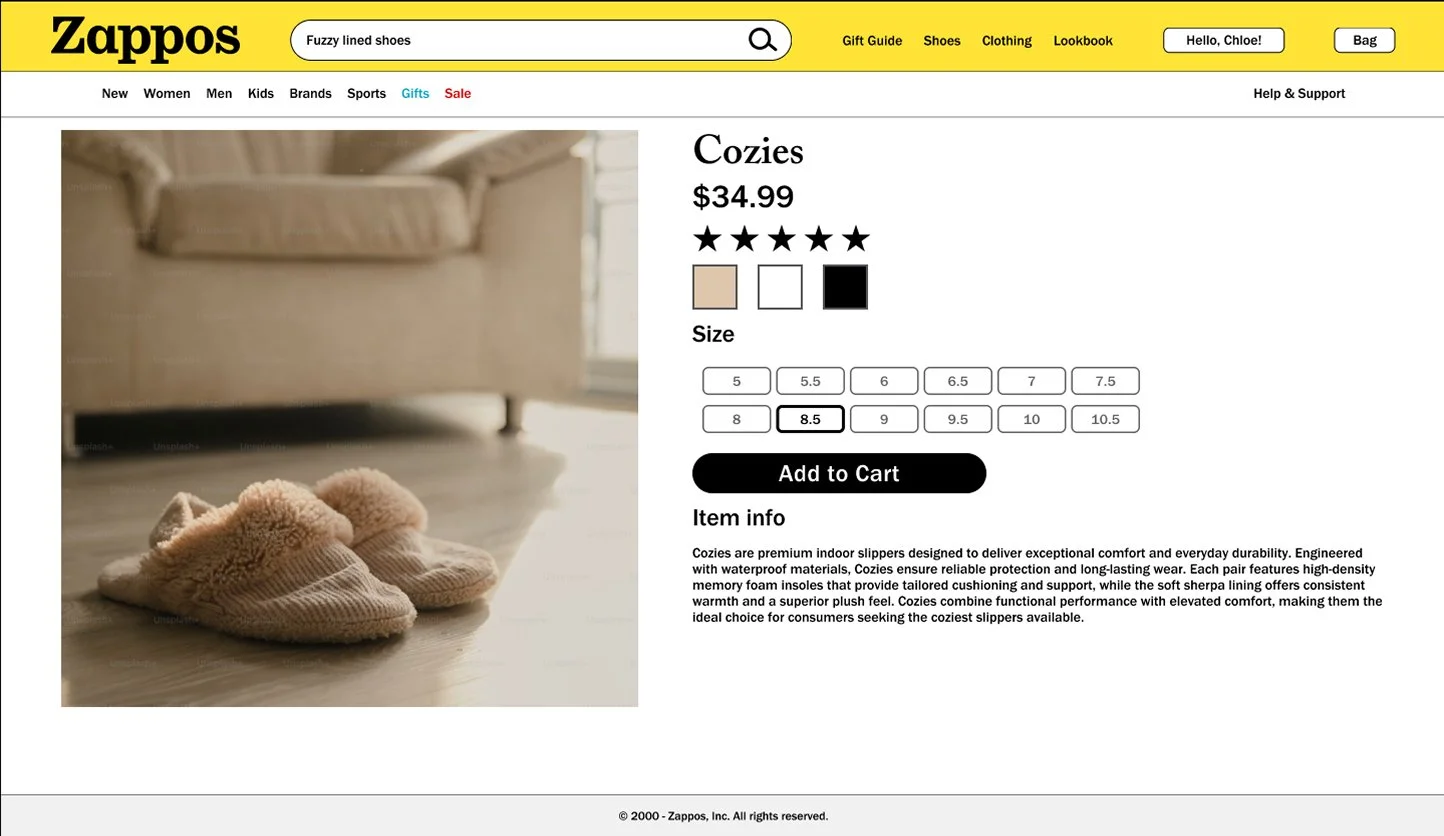
More present inclusion of Zappos’ Color Palette encourages association
Simple unique changes provide opportunity to be memorable
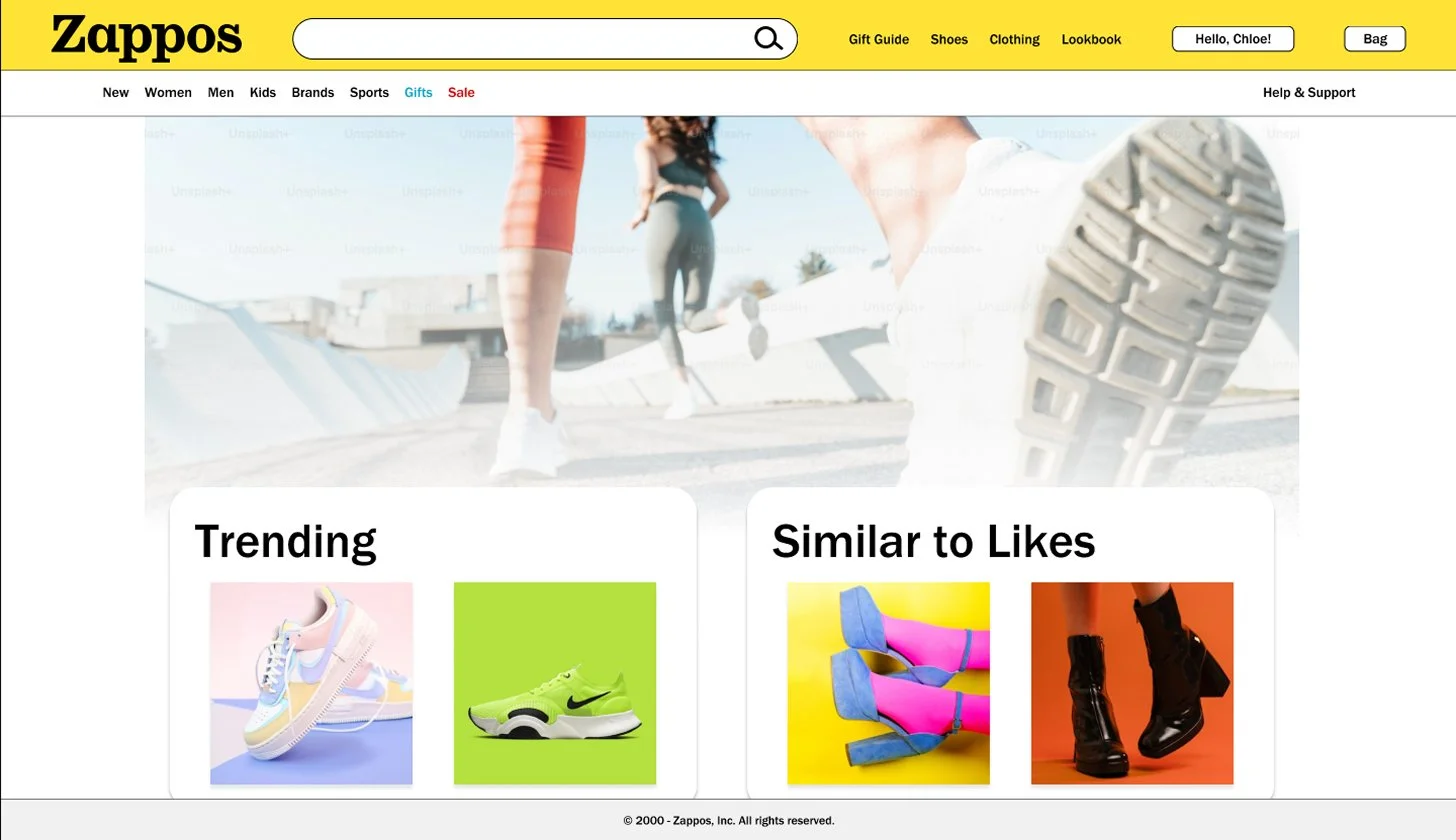
Utilizing saved account information prevents repetitiveness and proactively sets up users for easy check out
Checkout information is asked for all at once
Eliminates the time needed to wait between steps and all information can be submitted at once.
You cannot deliver WOW if you cannot be remembered.
In Retrospect
I had never even heard of Zappos before the introduction of this project.
The only thing that really drew me to Zappos was the fact it I needed a new pair of shoes, and when I saw the site, I knew they would have shoes.
That’s right, I actually bought a pair of shoes in my initial analysis of the shopping process, and I’m very glad I did (those shoes have found their way into my regular rotation of footwear). Admittedly though, we had a lot of wiggle room in how the project progressed, and while I’m very satisfied with the results, there are some weak spots that I wish had some stronger backing.
Due to our tight timeline, I only had the time to do some brief surveying of possible weak spots in Zappos’ process, so my research isn’t as fleshed out or solid as I’d like it to be; so I had to rely on statistics from secondary sources as my foundation.
As much as I love how my prototypes came out, this was really it’s only iteration. I ended up going from a low fidelity prototype directly up to a high fidelity, and wasn’t able to gather a group to go through multiple rounds of testing to make sure I had presented the strongest solution I could.