
FreshTrack is an application concept made and presented for San Jose City College for a fictional client. Following the guidelines of a design sprint, this project spanned over four weeks.
FreshTrack was made to make users more efficient in their consumption by tracking food items, planning meals, and notifying users of upcoming expiry dates to prevent waste.

Many people forget what’s in their fridge or let food go bad before they can use it.
We help plan meals, track groceries, and reduce waste.
31% of food in the USA is tossed out.
FreshTrack was constructed to help the fight against food waste.
Why join the fight?
01
Nearly half of all food waste in the USA is from households
The average household tosses out 6.2 cups of food a week, resulting in 322 cups, or 360 medium take out containers of waste a year.
02
Water, Energy, and Labor go to waste on food that’s tossed
Food doesn’t grow out of nowhere. It needs to be cultivated, raised, and prepared before it makes its way to the table.
03
Money spent on food that you don’t eat is money lost
The average household can save up to $1,500 a year by eliminating food waste.

Expiry notification

Recipe center home

filter menu

recipe search results
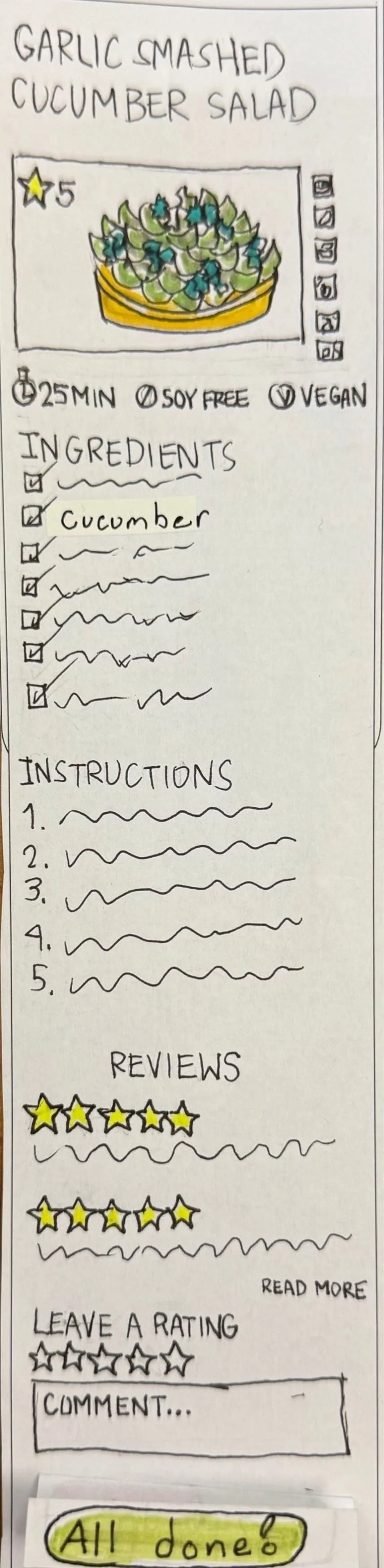
recipe page

item use confirmation

shopping list

shopping list add confirmation
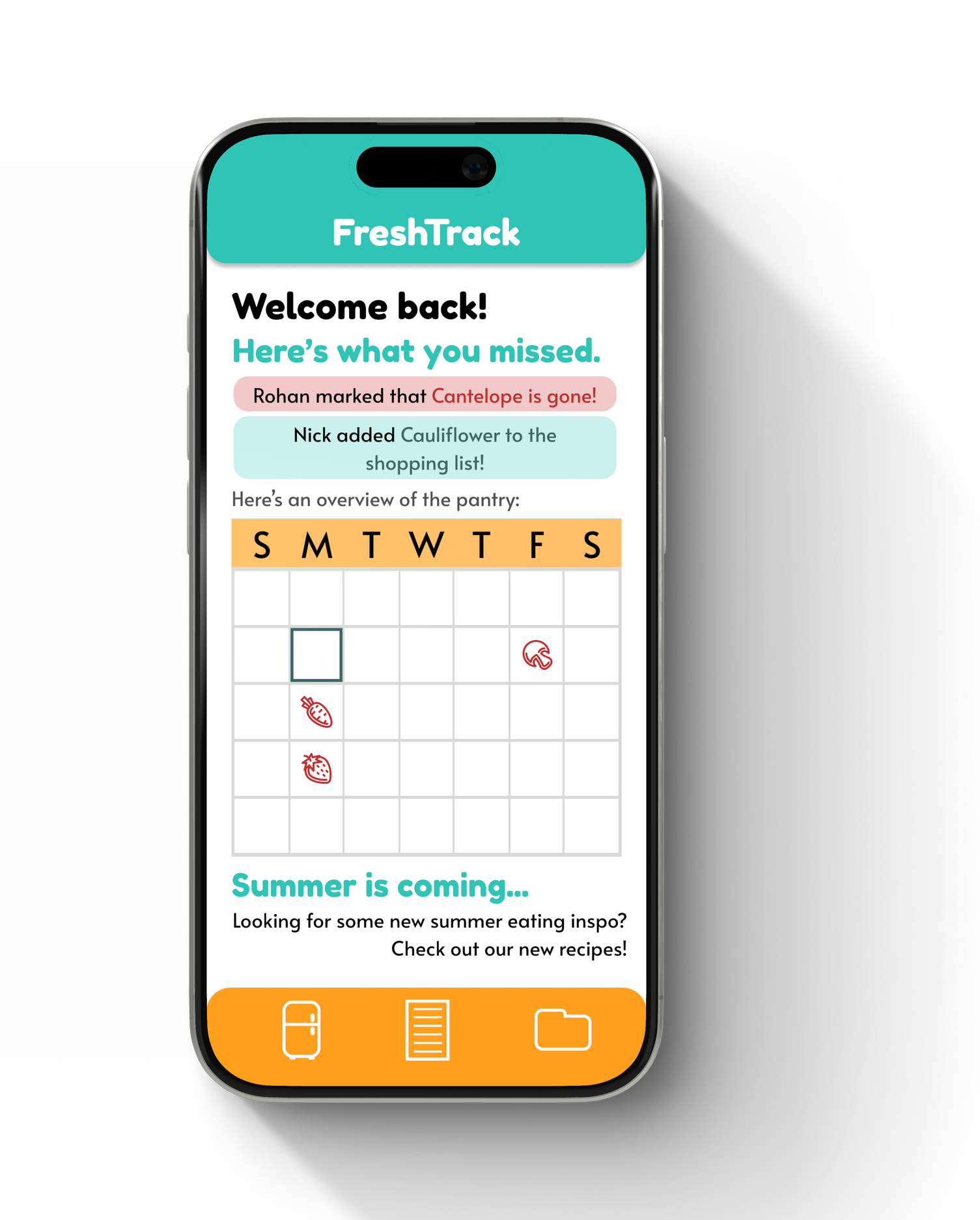
Recent changes to pantry and shopping list first
Suggested recipes for seasonal ingredients
Calendar shows upcoming item expiry
Three main pages easily accessible at all times, fridge, shopping list, recipes
FreshTrack Team
-
Shahpar Fakhar
FACILITATOR
-
Chloe Limargo
PROJECT COORDINATOR
-
Linda Dao
LEAD RESEARCHER
-
Diana Rodriguez
LEAD UI DESIGNER
In Retrospect
This is one of the first projects where I was really proud of my final prototype.
As soon as we got the guidelines for this and formed our groups: we did laid out how we expected the project to go and what our ideals and work styles were like to better understand the best path to take.
As this was our first run through the Design Sprint process, I was fairly concerned about what exactly needed to be done. We were taught all of the steps of the sprint as they were happening. So we ended up falling into just doing what we were taught without actually understanding why they were done like that, or what the purpose of that part of the process was.